
How games can strengthen newsrooms – and why they may be the next big step for newsrooms
In an era where newsrooms worldwide grapple with shrinking advertising revenue, scattered audiences, and increasing competition from global platforms, an unexpected solution is gaining real momentum: games. During a recent FT Strategies webinar on the ROI of Games, publishers from Europe and beyond shared remarkable insights about how games are becoming a powerful tool to attract new readers, deepen loyalty, and unlock fresh revenue streams. The trends are clear—and highly relevant for a South African newsroom, as users increasingly turn to social media for their news.
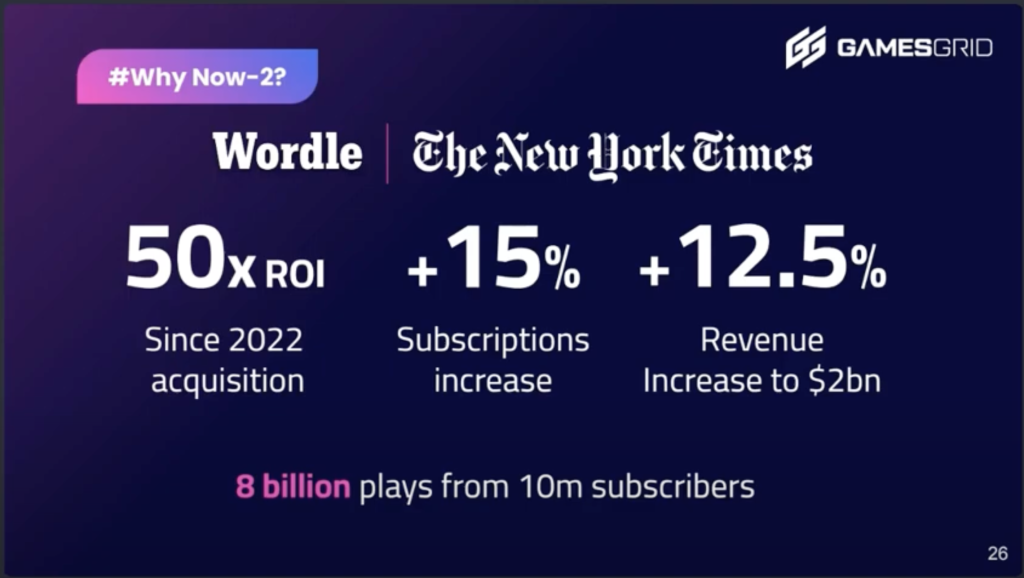
One of the strongest arguments to emerge from the session is that games help form daily habits in ways traditional journalism often struggles to do. The New York Times is the most prominent example: after buying Wordle, the publication saw millions of people returning every day to play a simple word game—and then staying for the journalism. Conor Deane, CEO and Founder of GamesGrid, noted that The New York Times saw a 50 times ROI since the acquisition of Wordle in 2022. It’s subscriptions to the website increased by 15% and thus its revenue increased by 12.5% to $2bn. This is significant as The New York Times only paid as little as $1 million (as low as) for Wordle (Time.com, 2022)
These kinds of games become a “daily anchor”, something small but meaningful that prompts readers to visit a site regularly, even on days when the news feels heavy or overwhelming. Here, newsrooms in South Africa can benefit: a daily game could evolve into an important part of the reader’s morning routine—alongside coffee, the weather, and the latest news.
Another key theme from the webinar is that younger audiences—those who often avoid traditional news—are far more likely to interact with games. They may not yet read long investigative pieces, but they will play a quick puzzle, a quiz about current affairs, or a two-minute word game. Games offer a softer entry point, especially in a world where most online spaces feel either too negative or too overwhelming. By starting with something familiar and fun, publishers create a bridge into deeper editorial content. This approach could align well with newsrooms’ aim to grow their digital reach while still maintaining their core focus on quality journalism.
Beyond engagement, games also open the door to valuable first-party data—a growing necessity as cookies disappear and audience behaviour becomes harder to track. When readers register to save a score, join a leaderboard, or track a personal streak, they willingly share information with the publisher. Several speakers emphasised how crucial this data has become. One Estonian news outlet, despite already having one of the highest subscription penetrations in the world, found more than 4,000 brand-new leads purely through its investment game. This is exactly the type of organic, meaningful data capture that can help a newsroom strengthen relationships, personalise newsletters, or build membership offerings and, more importantly, link advertisers with the right audience, something that social media platforms have done well.
Games create brand-safe moments for advertisers—crucial on days when the news cycle is dominated by war, crime, or political conflict. Because users spend far more time inside a game than on a typical article, the ad impressions multiply. Sponsored games, in particular, have become extremely attractive to banks, telecoms brands, and other large partners. The Estonian example is striking: a financial news publisher partnered with Swedbank and Nasdaq to run a national investment game with real-life incentives, including a trip to the Nasdaq bell-ringing ceremony in New York. The campaign didn’t just bring in large sponsorship; it significantly expanded their audience and strengthened their brand position in the country’s financial sector.
But the webinar also warns against the idea of simply adding a handful of random games and hoping for the best. The most successful publishers curate a small collection—usually between six and twelve titles—that suit their audience, align with their brand, and can be played quickly without downloads or complicated instructions. Simplicity matters. So does rhythm: a few games that refresh daily, perhaps one or two that change weekly, and special seasonal games tied to events, public holidays, or major news moments. The panel highlighted that visual cohesion is essential too; the games must feel unmistakably part of the publisher’s world. For Afrikaans news platforms in South Africa, this could mean games that reflect Afrikaans culture, idioms, places, or even popular historical figures.
Gamification—features like streaks, badges, leaderboards, and custom leagues—emerged as a powerful driver of long-term engagement. Once readers compete with colleagues, family, or even well-known personalities, the emotional connection to the brand strengthens rapidly. One publisher reported that their readers created more than 500 self-organised leagues, turning solitary play into community participation. This community-driven dynamic could be the “carrot in front of the donkey” for newsrooms.
Artificial intelligence, unsurprisingly, also made an appearance in the discussion. Some companies are experimenting with AI-generated quizzes, adaptive difficulty levels, or hyper-fast content updates. But the panel agreed that human-crafted game design still delivers the highest quality and trust. AI should be used to enhance the process, not replace thoughtful editorial judgment. In a South African context—where cultural nuance, humour, and language identity matter greatly—human oversight will remain essential.
Perhaps, the most practical guidance from the webinar concerns where to begin. Publishers starting this journey should think in terms of experimentation. Launch one or two small, simple games, measure how users interact, adjust quickly, and only scale what works. Promotion matters too: games must be easy to find on the homepage, in newsletters, and on social platforms. And while prizes can help drive initial momentum, they don’t need to be extravagant; in many cases, small weekly rewards or recognition through leaderboards can be even more motivating. Here, brand partners could also enhance user participation with prizes, coupons, or discount vouchers for online purchases encourages game participation, website visits, and advertiser ROI.
The webinar ultimately paints a compelling picture: games are not a gimmick. They are a strategic tool that strengthens loyalty, expands reach, increases revenue, and turns passive readers into active community members. For South African newsrooms, with their strong sense of culture, language, and community, games offer an exciting opportunity to support sustainable journalism while deepening the everyday relationship with their readers. As digital behaviour continues to evolve, a carefully crafted game layer could become not just an add-on—but a new pillar of audience engagement for news websites.
Sources:
FT Strategies, webinar. 3 December 2025. https://www.ftstrategies.com/en-gb/insights/the-roi-of-games-how-gamification-drives-engagement-for-publishers?utm_medium=email&_hsenc=p2ANqtz-_HyJVADhYCtpEsIrvRLsV6VwaTN7aWB-XKHRjOKBvz5NZzqPVpTUKKZofpQC7FRTyViVDxdQN83bK1MIUwdp-xKWBcN2xTyBgjfnCP5r61Y6G5oAg&_hsmi=123185283&utm_content=123185283&utm_source=hs_email
Smith, G. 2022. “The New York Times is buying Wordle for more than $ 1 million.” Time.com (read 03 December 2025). https://time.com/6143832/new-york-times-buys-wordle/